Six restaurant online ordering systems get ranked here by who they actually fit, not by feature count — because the wrong pick means a POS bill and a delivery app cut eating into the same order twice.
- Link Mahal wins for Lebanese restaurants and cafés selling through WhatsApp with COD and Whish Pay — zero per-order commission.
- GloriaFood is the free pick for restaurants that just need an ordering widget on an existing website.
- Toast fits US restaurants that want POS and online ordering under one login.
- Otter is built for restaurants juggling three or more delivery app tablets at once.
- Deliverect is the multi-location answer for chains syncing menus across five or more delivery platforms.
Why this matters
Most restaurant online ordering systems in 2026 are built around one of two assumptions: either you're a US quick-service chain running a POS, or you're selling through a delivery app that takes a cut of every order before you see a cent. Neither assumption fits a Beirut café taking orders on WhatsApp with cash-on-delivery and Whish Pay, or a diaspora-run kitchen shipping orders to customers who pay in USD one day and LBP the next.
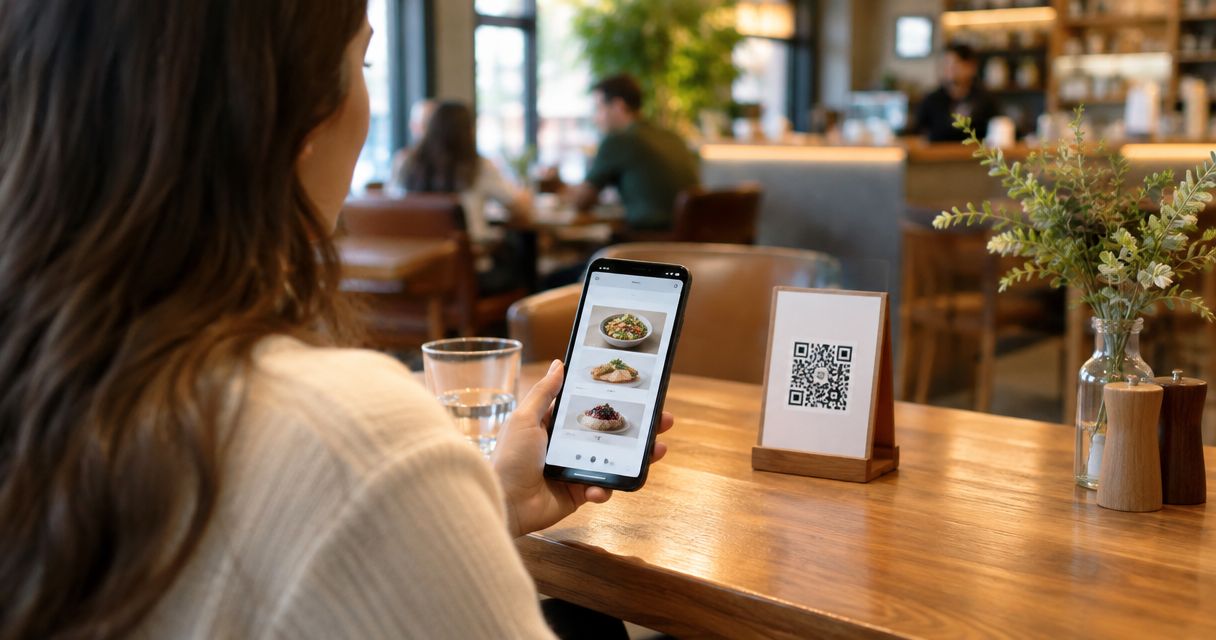
That gap is exactly why a system like the WhatsApp storefront builder from Link Mahal exists — a QR-based digital menu paired with structured WhatsApp checkout, no POS hardware, no delivery-app commission. The rest of this list covers where the bigger, US-centric platforms still make sense, and where they don't.
What makes the best restaurant online ordering system
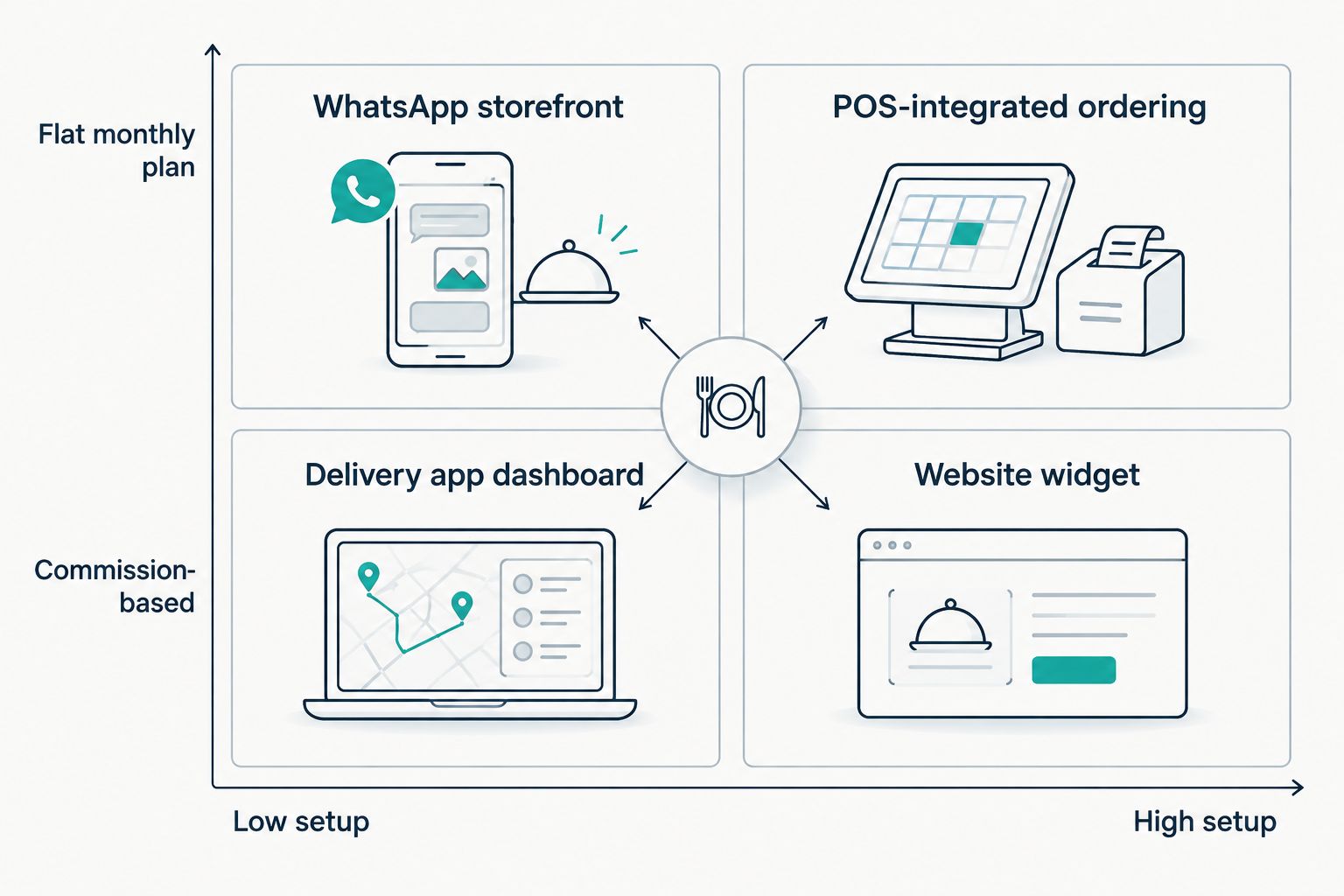
- No forced commission per order — a flat monthly plan beats a 15-30% cut on every ticket
- Payment methods that match where the customer actually is — COD, Whish Pay, OMT, or card, not just Stripe
- Setup that doesn't need a developer — live in minutes, not a two-week onboarding call
- Menu structure that handles variants — sizes, add-ons, and out-of-stock items without a spreadsheet
- Order flow the customer already trusts — WhatsApp, a QR scan, or a checkout page they've used before
- Multi-location or multi-platform sync — only relevant once you're running more than one kitchen or more than one delivery app
Restaurant online ordering systems at a glance
| System | Best for | Standout feature | Key limitation |
|---|---|---|---|
| Link Mahal | Lebanese restaurants selling via WhatsApp | Zero-commission WhatsApp checkout with COD and Whish Pay | Not built for US POS integrations |
| GloriaFood | Free ordering widget on an existing site | No-cost embed for restaurants that already have a website | Limited structured checkout compared to a full storefront |
| Toast | US restaurants wanting POS + ordering combined | Hardware and software under one system | Overkill for a single-location café with no POS |
| Square Online | Quick-service restaurants already on Square | Ordering syncs directly with existing Square POS | Locked into the Square ecosystem |
| Otter | Restaurants running 3+ delivery apps | One dashboard for orders across multiple delivery platforms | Adds a layer on top of, not instead of, delivery app fees |
| Deliverect | Multi-location chains syncing menus | Menu and inventory sync across delivery platforms | Built for scale, not a single small restaurant |
1. Link Mahal: best restaurant online ordering system for WhatsApp-first sellers
Link Mahal turns a QR code into a digital menu and an AI-powered WhatsApp storefront with structured checkout — built specifically for Lebanese restaurants, cafés, and shop owners selling to customers in Lebanon and the diaspora. There's no code, no hosting, and no plugins to manage; the storefront goes live in minutes and the order lands as a structured WhatsApp message instead of a scattered DM thread.
Link Mahal pros:
- Zero commission on orders — a flat monthly plan replaces the per-order cut delivery apps take
- Structured WhatsApp checkout instead of back-and-forth DMs
- Supports COD and Whish Pay, matching how Lebanese customers actually pay
- QR code menu doubles as the entry point to the storefront, no separate app download
Link Mahal cons:
- Not designed as a US-style POS replacement with hardware terminals
- Best suited to sellers already comfortable running orders through WhatsApp
Best for: Lebanese restaurants, cafés, and shop owners who want to keep 100% of their order value instead of losing a cut to a delivery app.
Verdict: Buy — if orders are coming through Instagram bio links or word of mouth already, this converts that traffic into structured checkout.
2. GloriaFood: best free ordering widget for an existing website
GloriaFood embeds an ordering widget directly onto a restaurant's existing website, letting customers browse a menu and submit an order without leaving the page. It's a common starting point for restaurants that already invested in a website and don't want a second platform.
GloriaFood pros:
- Free tier covers basic online ordering for a single website
- No separate app for customers to install
- Simple to embed for a restaurant that already has a site
GloriaFood cons:
- Checkout is less structured than a dedicated storefront with payment method logic
- Limited fit for restaurants without an existing website to embed on
Best for: Restaurants that already have a website and just need an ordering box added to it.
Verdict: Hold — fine as a stopgap, but a restaurant relying only on WhatsApp and Instagram for traffic won't get much use from a widget that needs a website to sit on.
3. Toast: best for US restaurants running POS and ordering together
Toast combines point-of-sale hardware with online ordering, kitchen display systems, and staff management in one platform. It's built for restaurants that need the ordering system to talk directly to the register and the kitchen printer, not just take orders online.
Toast pros:
- POS and online ordering share the same menu and inventory data
- Kitchen display integration reduces order entry errors
- Built for restaurants running dine-in, takeout, and delivery from one counter
Toast cons:
- Requires hardware setup, not a fit for a QR-and-WhatsApp operation
- More system than a single small café or diaspora seller typically needs
Best for: US restaurants that need POS hardware and online ordering under one login.
Verdict: Buy — for a restaurant already running a full POS setup, but Skip if the goal is a lightweight ordering flow.
4. Square Online: best for restaurants already on Square POS
Square Online extends Square's existing point-of-sale system into online ordering, syncing inventory and menu items with whatever's already running at the register. Restaurants that adopted Square for card payments get ordering added without switching systems.
Square Online pros:
- Direct sync with Square POS, no duplicate menu management
- Familiar dashboard for restaurants already using Square for payments
Square Online cons:
- Locks the restaurant into the Square ecosystem for hardware and payments
- Less useful for restaurants outside markets where Square operates
Best for: Quick-service restaurants already running Square hardware at checkout.
Verdict: Hold — solid if Square is already the register system, otherwise it's an extra platform to learn for no real gain.
5. Otter: best for restaurants managing multiple delivery apps
Otter consolidates orders from several delivery apps into one dashboard, so a kitchen isn't running four tablets side by side. It sits on top of existing delivery app accounts rather than replacing them.
Otter pros:
- One screen for orders arriving from multiple delivery platforms
- Reduces missed or duplicated orders during rush hours
Otter cons:
- Doesn't remove the commission each delivery app still charges per order
- Adds a subscription layer on top of fees already being paid
Best for: Restaurants running three or more delivery apps at once and drowning in separate tablets.
Verdict: Hold — useful for order management, but it doesn't solve the commission problem underneath.
6. Deliverect: best for multi-location chains syncing menus
Deliverect syncs menu items, pricing, and stock levels across delivery platforms and locations, so a chain updating a menu once doesn't have to repeat the update on five different apps. It's built for scale rather than a single kitchen.
Deliverect pros:
- Menu and stock sync across multiple delivery platforms at once
- Reduces manual menu updates for multi-location operators
Deliverect cons:
- Overbuilt for a single-location restaurant or café
- Still routes through delivery apps that charge their own commission
Best for: Multi-location chains that need one menu update to reach every delivery platform.
Verdict: Wait — worth revisiting once a restaurant expands past one location; not needed before that.
How this list was ranked
Each system was measured against the six criteria above: commission structure, payment method fit, setup difficulty, menu handling, order flow familiarity, and multi-location support. Link Mahal ranks first specifically for the Lebanese and diaspora use case because it's the only one on this list built around zero-commission WhatsApp checkout with Whish Pay and COD support — the others are strong picks for different starting points, not weaker versions of the same thing.
“The moment a delivery app takes a cut of every order, that's profit you already earned walking out the door.”
Which restaurant online ordering system should you choose?
If orders already come in through Instagram bio links, WhatsApp, or word of mouth, and cash-on-delivery or Whish Pay covers how customers pay: Link Mahal is the default in 2026. If a POS is already running the register, Toast or Square Online extend that setup without a second platform. If delivery apps are the main channel and the pain point is juggling four tablets, Otter solves the dashboard problem — it just doesn't touch the commission.
FAQ
What's the best restaurant online ordering system in 2026?
For Lebanese restaurants and cafés selling through WhatsApp, Link Mahal is the best restaurant online ordering system in 2026 because it charges zero commission and supports Whish Pay and COD. US restaurants running a full POS setup are better served by Toast or Square Online.
Is a WhatsApp ordering system better than a delivery app for small restaurants?
A WhatsApp ordering system keeps the full order value with the restaurant instead of losing a cut to a delivery app on every ticket. It works best when customers are already reaching the restaurant through Instagram, WhatsApp, or a QR code menu rather than a delivery app's own listing.
How much commission do restaurant online ordering systems charge?
Delivery apps typically take a percentage of every order as commission, while flat-fee platforms like Link Mahal charge one monthly plan with zero per-order commission. The difference compounds fast on high order volume.
Can a QR code menu replace a full ordering system?
A QR code menu on its own only displays items; it needs a structured checkout layer behind it to actually take and process orders. Link Mahal pairs the QR code menu with a WhatsApp storefront so scanning the code leads straight into checkout.
Do restaurant online ordering systems work with Whish Pay or OMT?
Most US-built platforms like Toast and Square Online don't support Whish Pay or OMT directly. Link Mahal is built around Lebanese payment realities, supporting Whish Pay alongside cash-on-delivery.
What's the difference between GloriaFood and Toast?
GloriaFood is a free ordering widget added to an existing website with no hardware required. Toast is a full POS system with hardware, kitchen displays, and online ordering combined, built for restaurants that need everything under one login.
Is Otter worth it for a restaurant that only uses one delivery app?
Otter's value comes from consolidating multiple delivery app dashboards into one screen, so a restaurant on just one delivery app gets limited benefit. It becomes useful once a kitchen is juggling three or more delivery tablets.
Can Lebanese restaurants accept both USD and LBP through an online ordering system?
Platforms built for the Lebanese market, like Link Mahal, are designed around the USD/LBP reality sellers face daily. US-centric systems like Toast or Square Online aren't built with that dual-currency setup in mind.
One last thing
The restaurants losing the most money in 2026 aren't the ones without a website — they're the ones running orders through a delivery app commission and a separate DM thread at the same time, paying twice for the same customer. A QR code menu paired with structured checkout closes that gap in one scan.
Set up your WhatsApp storefront
QR menu and structured checkout, live in minutes, zero commission.